

Securing National Infrastructure
Inside Scylla AI's Military-Grade Security Intelligence
A Conversation with CEO Albert Stepanyan
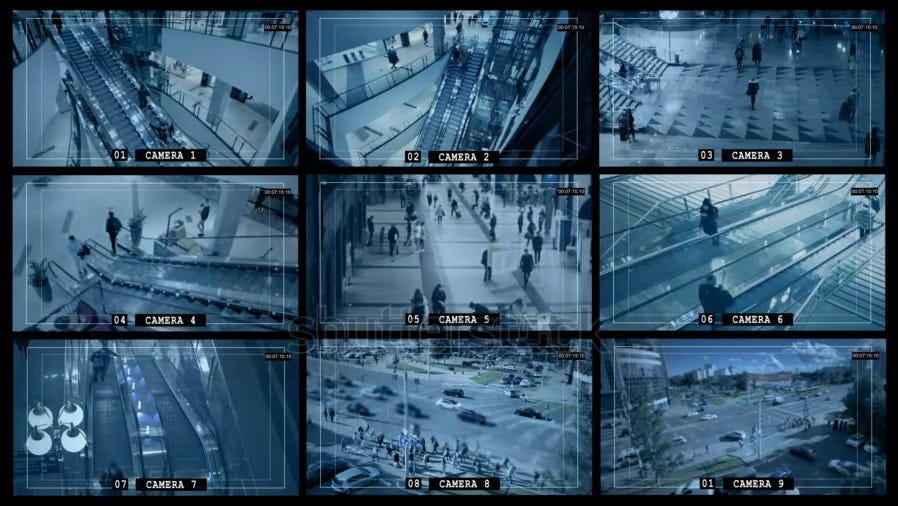
The $180 billion physical security market represents one of the largest technology sectors still operating on analog principles. While cybersecurity evolved into sophisticated real-time defense systems, physical security remains trapped in passive surveillance—cameras that record incidents but cannot prevent them.
Albert Stepanyan recognized this massive inefficiency while working as a security technology consultant for large-scale security operations, where he witnessed operators drowning in surveillance data while missing critical threats. "We understand the fatigue that security personnel go through when watching security cameras, and trying to do investigations when things go wrong," Stepanyan recalls.
Scylla AI, a Modern AI-powered surveillance system, has achieved over 96% threat detection accuracy in real-world deployments, dramatically reducing the false alarms that rendered earlier solutions impractical. This performance threshold represents a critical inflection point—reliable enough for deployment in high-stakes environments like military installations and critical infrastructure, while maintaining operational efficiency that security teams can actually manage.
The market opportunity reflects this technological maturity. AI-driven video surveillance represents a rapidly expanding $7.57 billion market in 2025, projected to quadruple by 2030. As part of the broader $13-14 billion military AI sector, advanced threat detection has become strategically critical for national security and commercial infrastructure protection alike.
The Accuracy Breakthrough That Changes Everything
Scylla solved the fundamental problem that killed AI adoption in physical security: catastrophic false positive rates. Early systems promised intelligence but delivered failures so severe that security teams learned to ignore AI alerts entirely. "There were so many bad technologies that tried to get to the customer," Stepanyan explains. "Customers became skeptical, especially in the North American market because they burnt their budgets and reputation by technology not working."
Scylla eliminated these failures through proprietary neural networks that achieved unprecedented precision. "Scylla achieved the accuracy threshold that had surpassed competitive systems, including benchmarks sought by the Department of Defense," Stepanyan notes. This military-grade credibility creates immediate commercial advantages, with DOD validation providing market credibility that opens doors across every sector. "We compete because we have the lowest false positive rates," he explains.
Market Expansion Across $180 Billion in Opportunities
The same technology that protects defense installations scales across commercial markets with shared need for reliable threat detection. Healthcare offers immediate opportunities driven by compliance requirements and violence prevention. "The healthcare industry in The United States has a lot of problems," Stepanyan explains. "Hospitals have budgets, and people in healthcare really try to solve that. It's one of the best industries we see on the market." (Read about Scylla’s Case Study on Healthcare Security)
Corporate facilities face workplace violence costing billions annually through lost productivity, Educational institutions present different dynamics driven by regulatory compliance. "Schools are forced to buy technology like Scylla for weapon detection," Stepanyan notes. Despite budget constraints, emotional stakes drive investment: "When you have children, you still have this constant fear about your kid." (Read about Scylla’s Case Study on protecting Artesia Public Schools)
The most promising scalability involves the $50 billion security services industry, where labor shortages force fundamental business model transformation. "Large security providers face structural challenges due to labor shortages and cost inefficiencies," Stepanyan explains. AI-powered remote monitoring enables single operators to protect multiple facilities simultaneously, responding only when algorithms identify genuine threats.
Unlike most defense tech companies that depend on unpredictable government procurement cycles, Scylla built commercial market credibility that generates sustainable revenue streams. "The fundamental principle is simple," Stepanyan explains. "Revenue validates everything. Without sustainable economics, you're building technology demos, not businesses." This bootstrap approach proved the economics work at scale while retaining top talent through equity participation. "We could retain top quality talent that could work for SpaceX or OpenAI with very humble budgets. They're shareholders—that's how they're loyal."
Their premium positioning reflects real-world stakes rather than government cost-plus models. Organizations protecting high-value assets understand that security failures cost far more than technology investments. "It's not just the cost of breaking in, but reputation. It's like buying insurance—you never wanna get sick to use it," Stepanyan notes.
The Next-Generation Intelligence Platform

Scylla's evolution toward comprehensive security intelligence represents fundamental market expansion beyond traditional surveillance into predictive threat prevention. The platform develops context understanding capabilities that recognize behavioral patterns before threats escalate. "The key is rolling out systems that understand beyond specific activities," Stepanyan explains. "The system identifies behavioral anomalies—such as nervous movements, prolonged loitering, or scanning behavior."
This progression enables conversational queries through surveillance archives, transforming how organizations investigate incidents. "We do feature extraction—your outfit, age, gender. You can chat with it, do semantic search similar to a chatbot," Stepanyan notes. Development focuses on lightweight edge processing that delivers real-time alerts without overwhelming operators through distributed architecture that enables rapid response while maintaining system efficiency.
Stepanyan predicts market acceleration ahead: "In the next twelve to twenty-four months, you will see technologies like this already having successful systems in place." However, Scylla's commitment to 95%+ accuracy before release differentiates their offering from competitors rushing unreliable solutions to market.
The company's measured approach reflects understanding that conservative markets require proven reliability. "This industry is very conservative. If you fail once, nobody's gonna trust you anymore," Stepanyan observes. "We focus on mature, reliable deployment rather than being first to market." This approach builds sustainable competitive advantages while establishing the reputation required for widespread enterprise adoption.
Scylla's growth is rooted in real-world operational experience, advanced technical performance, and measurable results in both defense and commercial domains. The company represents the evolution from reactive monitoring to proactive threat prevention—technology that scales military-grade capabilities across commercial markets while building sustainable businesses independent of government dependency.
Editor's Note: Albert Stepanyan is the CEO and co-founder of Scylla AI, an Aero X Ventures portfolio company revolutionizing threat detection through military-grade AI security intelligence. Scylla's scalable protection across defense, commercial, and infrastructure applications represents a commitment to technologies that provide confident deterrence against the full spectrum of critical threats facing American society.
Read Scylla’s Case Studies.